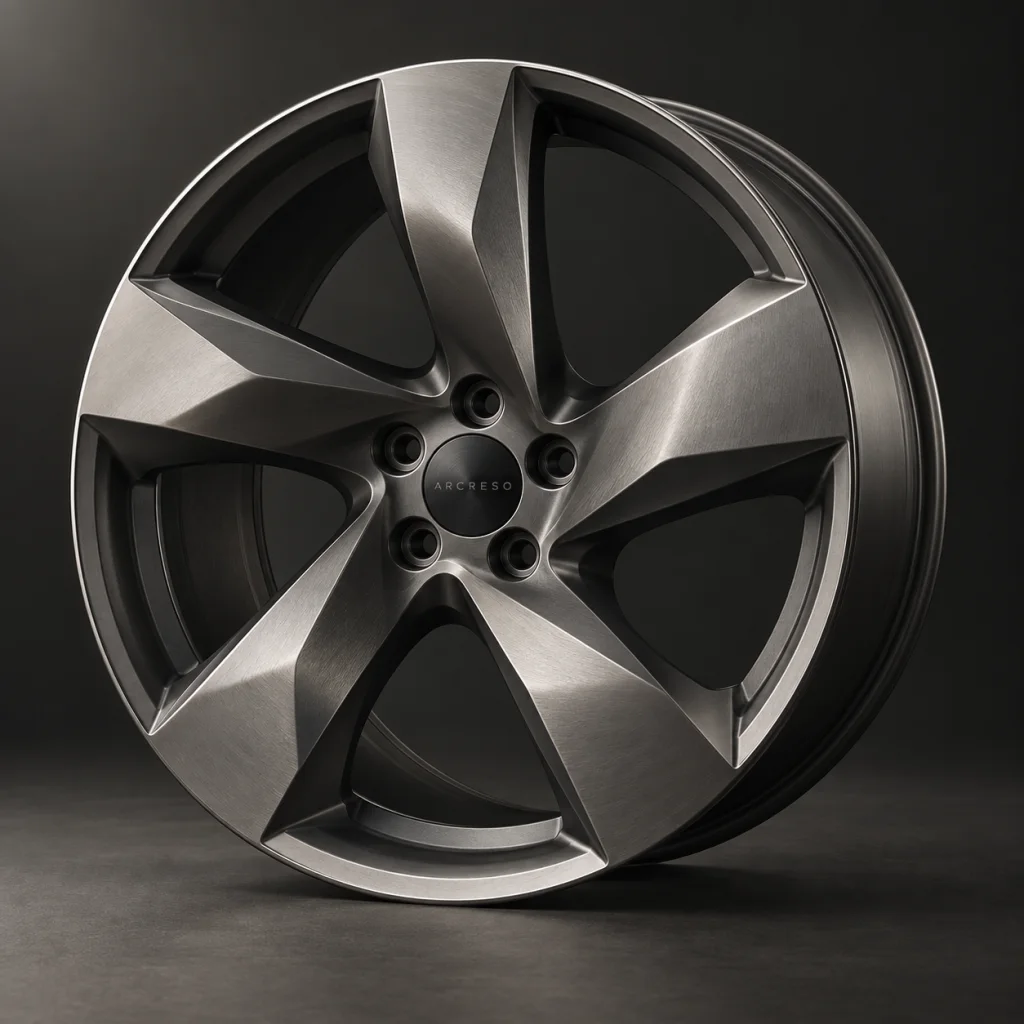
A deep-concave wheel asks you to look into the face rather than across it. The spokes descend toward the center, turning a round object into a composition of edges, highlights and shadow. That depth can give a car a more sculptural presence. Choosing it begins with the visual character you want; making it work depends on the wheel and vehicle together.
Explore two other decisions in the brief: wheel and sidewall proportion on SUVs and surface, reflection and contrast.
01 / Read the face from an angle.
From directly in front, two wheels with different face profiles can appear surprisingly similar. Move to a three-quarter view and the spoke slope becomes easier to read. A flatter face holds the design near one plane. Medium concavity adds a gradual change in depth. A deep profile creates a more pronounced descent, with the center appearing farther behind the outer ends of the spokes.
VISUAL COMPARISON / CONCAVITY / DEPTH
FORM GAINS ANOTHER DIMENSION.
Follow the spoke profile from the outer rim to the center.
Flat, medium and deep are useful visual descriptions. Compare the ARC-01 design study from several angles instead of judging it from one dramatic close-up.
02 / Light makes the depth visible.
A highlight on the outer spoke can contrast with shadow near the center, making the slope feel stronger. Broad spokes create larger surfaces for that transition; narrow spokes divide it into smaller lines. The finish changes the effect too. Brushed or polished surfaces can reveal bright edges, while a dark finish may merge part of the face into the tire in low light.
These are design impressions, influenced by the scene and camera position. For a useful reference, include one image that shows the whole car and another that shows the face at an angle. The first explains proportion; the second explains the depth you like.
03 / Width and offset belong in the same conversation.
Concavity describes the spoke profile. Width describes the rim, and offset positions its mounting face relative to the rim centerline. They refer to different parts of the geometry, but a particular wheel design has to accommodate them together. A wider wheel or a different offset can change the design space available; neither number guarantees a particular face profile.
ENKEI explains offset and the inner and outer clearance relationships. Start with those relationships in our Fitment Library. The useful question is how the intended wheel and tire sit on this vehicle, alongside the face you prefer.
04 / The vehicle shapes the possibilities.
The hub and mounting arrangement, brake package, suspension and available body space all matter. The back of the spokes must clear the brakes, while the complete wheel-and-tire assembly needs room inside and outside. Matching the diameter and bolt pattern is only part of that assessment. ENKEI also identifies the mounting interface and suitable hardware as selection requirements.
A large SUV body does not automatically provide more usable spoke depth. Different generations, brake options and modifications can change the picture. Our Patrol and G-Class design directions begin with the vehicle and your desired stance, then prepare the details for review.
05 / More depth is a design choice.
Depth changes the character. Engineering establishes the usable design.
A deep face does not, by itself, demonstrate greater strength, lower weight or higher performance. Those questions concern the actual design, material, load requirements and supporting test evidence. A shallower profile can still be the right expression for a car with restrained bodywork or a different brake package.
Vossen describes its own vehicle-specific engineering process, in which vehicle measurements inform width, offset and concavity together. The useful principle is to evaluate the combination rather than chase the deepest face in isolation.
06 / Turn a reference into a clear brief.
Share your vehicle make, model and year, the current wheel and tire setup if known, and any brake or suspension changes. Add a three-quarter wheel image and describe what attracts you: the center depth, the spoke shape or the contrast between the outer edge and hub. A reference with a different vehicle can still communicate a preference without setting the final specification.
You can explore an existing Collection direction or bring your own reference through Custom Wheels. Unknown measurements can remain unknown in the first request. A precise brief starts with a clear idea, then separates the preferred look from the dimensions that need confirmation.
Find the depth for your build.
Choose the face you like and tell us about the car. We will use that starting point to discuss the design direction and the information needed for an individual review.