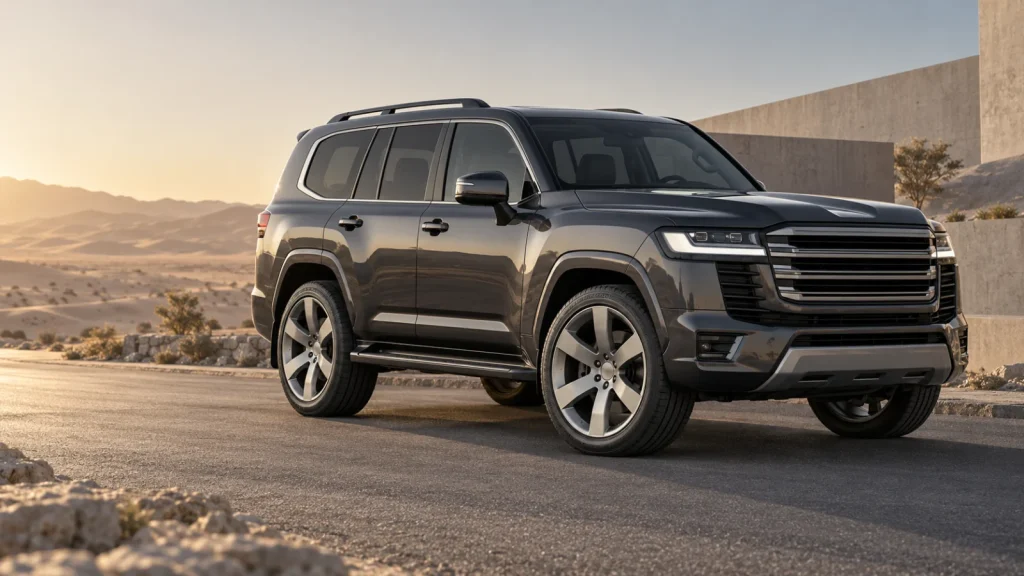
A large SUV gives its wheels a strong frame: tall bodywork, broad arches and a long side profile. A 20-inch and a 22-inch wheel can shift the visual balance inside that frame. The useful comparison starts with the complete wheel and tire, then considers how the vehicle is used.
01 / Compare the same outer diameter.
VISUAL COMPARISON / WHEEL / SIDEWALL / PROPORTION
SAME TIRE CIRCLE. A DIFFERENT BALANCE.
Compare wheel presence with tire sidewall, rather than judging by the diameter label alone.
The tire occupies more of the visible circle.
An intermediate visual step, not a universal optimum.
The wheel face occupies more of the same circle.
RELATIONSHIP STUDY · The outer tire diameter is held constant; the nominal rim sizes follow a 20:21:22 ratio. The middle step is a visual reference, not a recommended size. No vehicle compatibility is specified.
Here, both illustrations use the same overall tire diameter. The 22-inch rim occupies more of the circle, leaving less radial sidewall height; the 20-inch rim occupies less, leaving more. The tire’s outside edge stays in the same place. This isolates the visual change from changing the entire assembly size.
Michelin describes this principle in its plus-sizing guidance: a larger rim is paired with a lower tire aspect ratio while keeping overall diameter consistent. Real tire dimensions and approved combinations still come from the selected tire’s technical data.
02 / Read the wheel and the sidewall.
More visible wheel face can emphasize spokes, surface treatment and concavity. More visible sidewall can give the assembly a fuller tire-led appearance. Those are design observations: neither proportion is automatically more premium, more capable or better suited to your SUV.
Spoke length and finish change the impression too. A bright spoke that reaches the outer edge can draw attention to the rim, while a dark face in a shadowed arch may look quieter. Compare the full vehicle from a similar side angle before judging a close-up. The wheel-to-body relationship matters more than the number alone.
Keep ride height and tire outer diameter consistent when comparing references. Otherwise a lower suspension or larger tire may explain the apparent change in arch space. In the schematic, the rim grows within the existing tire circle; it does not lift the vehicle.
03 / Bring the road into the brief.
Tell us about the roads you actually drive: smooth city routes, uneven surfaces, long highway journeys or planned off-road use. A weekend appearance build and a regularly loaded daily vehicle ask different questions of the same wheel direction.
Michelin explains the general sidewall trade-off: taller profiles absorb road impacts more, while lower profiles can feel harsher on rough surfaces. The complete tire construction, pressure, load and suspension also influence the result. A 20-inch label alone cannot predict comfort, and a 22-inch label does not establish handling or off-road capability.
04 / Review more than diameter.
A suitable proposal needs the wheel width, offset and mounting interfaces alongside the tire dimensions. The selected tire must be approved for the rim width. Load capacity, speed requirements and the correct inflation arrangement belong in the same review.
General Tire’s 2025 passenger and light-truck plus-sizing guidance covers rolling circumference, load, tire-and-rim combinations and clearance throughout steering and suspension movement. That publication is scoped to the US, Canada and Mexico; local requirements and the vehicle manufacturer’s guidance must also be checked. Brake clearance depends on the actual barrel and spoke profile, rather than nominal rim diameter alone.
05 / Start with your specific SUV.
A model name is a useful starting point, followed by year, version, brake package and any suspension or body changes. The Nissan Patrol, Land Cruiser 300, G-Class and Range Rover pages offer design directions, without assigning a universal wheel size to each model.
Send the vehicle placard, current tire markings and wheel details if available. Michelin identifies the placard and owner’s manual as the original specification references. A previous owner may have changed the assembly, so record both the vehicle reference and what is currently fitted.
Include a side-profile image and a wheel-arch close-up taken on level ground. Describe regular passenger or cargo use, and whether you plan to keep the existing suspension. These details help distinguish an appearance preference from the installation questions that need to be resolved.
Build the proportion around your car.
Share your SUV, intended use and the proportion you prefer. Include one full-vehicle reference and explain whether the wheel face or the tire should carry more visual weight. Unknown dimensions can wait for the review; there is no need to guess a tire size.
Explore the Fitment Library, then read What Wheel Fitment Actually Changes or Deep Concave Wheels: Form vs Fitment. The schematic compares proportions; the hero image is concept inspiration and has no verified wheel-size specification.