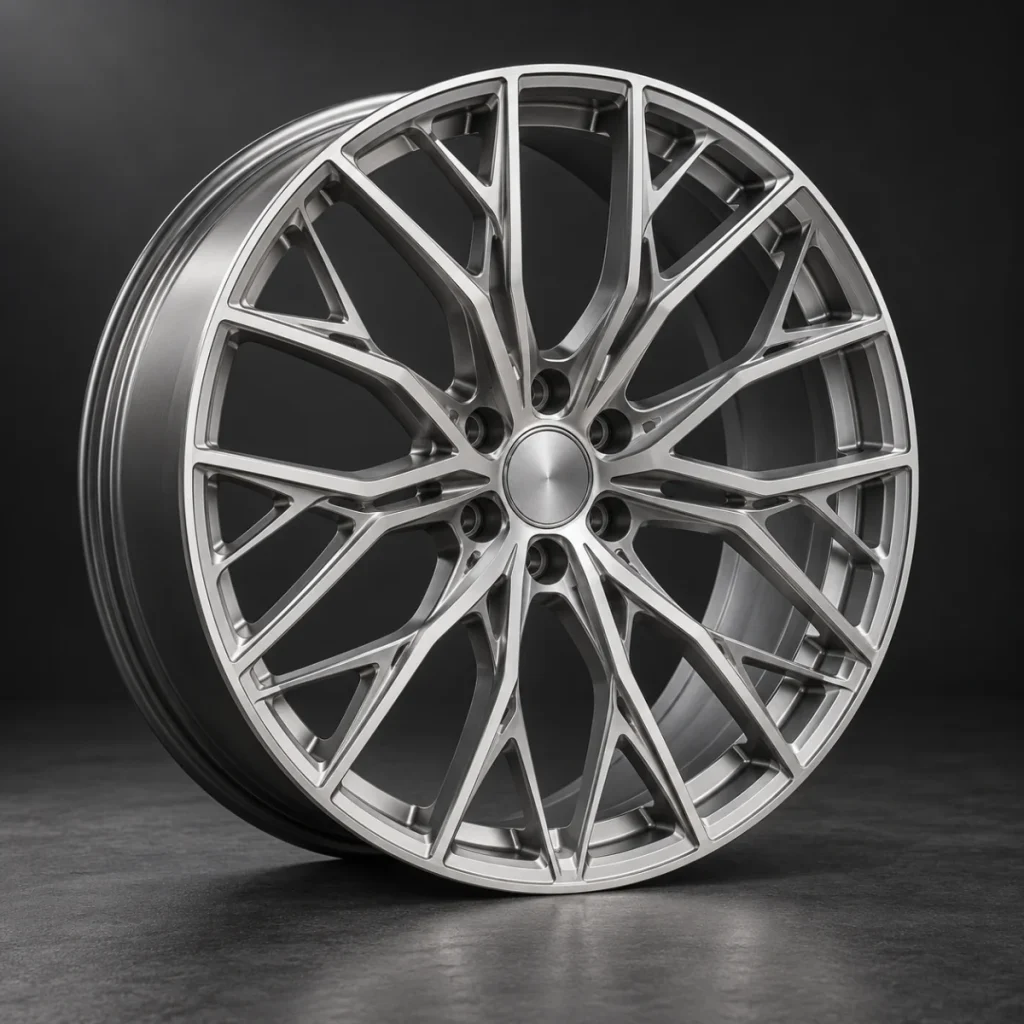
A wheel does not need to turn to suggest movement. Slender spokes, repeated gaps and a clear rim edge can create a quick rhythm across its face. The eye travels from center to edge, follows a line, then crosses an open space before meeting the next one.
Space is part of the design.
With less visual mass in each spoke, the spaces between them become more prominent. They let the surrounding shadows and brake shapes enter the composition. A dense arrangement of fine lines can feel precise and restless; fewer broad spokes usually give the eye larger surfaces to settle on.
A faster visual rhythm starts with the spaces between the spokes.
Keep the impression in context.
That feeling depends on the whole face. Spoke count, branching, finish and the curve into the center all change the result. A polished edge can separate one slender line from the next. A dark surface in dim light can merge those lines and make the wheel feel more solid.
The ARC-03 study uses a fine, branching rhythm; ARC-06 takes a broader, curved approach. Compare their silhouettes as well as their details. Thin-looking spokes do not establish wheel weight, strength or driving performance. For a build brief, share the character you want and a reference that shows it clearly.